Physical Education · Optio Academy
Learning to Wake Surf for High School PE Credit
A high school student learned to wake surf, analyzed board physics, and built an equipment budget to earn Physical Education credit.

Dr. Tanner Bowman
Founder, Optio ·
- Student
- Clare, 17
- School
- Optio Academy
- Grade
- High school
- Subjects
-
- Physical Education
- Financial Literacy
- Language Arts
- Science
- Digital Literacy
- Activity
- Learning to wake surf
What the student did
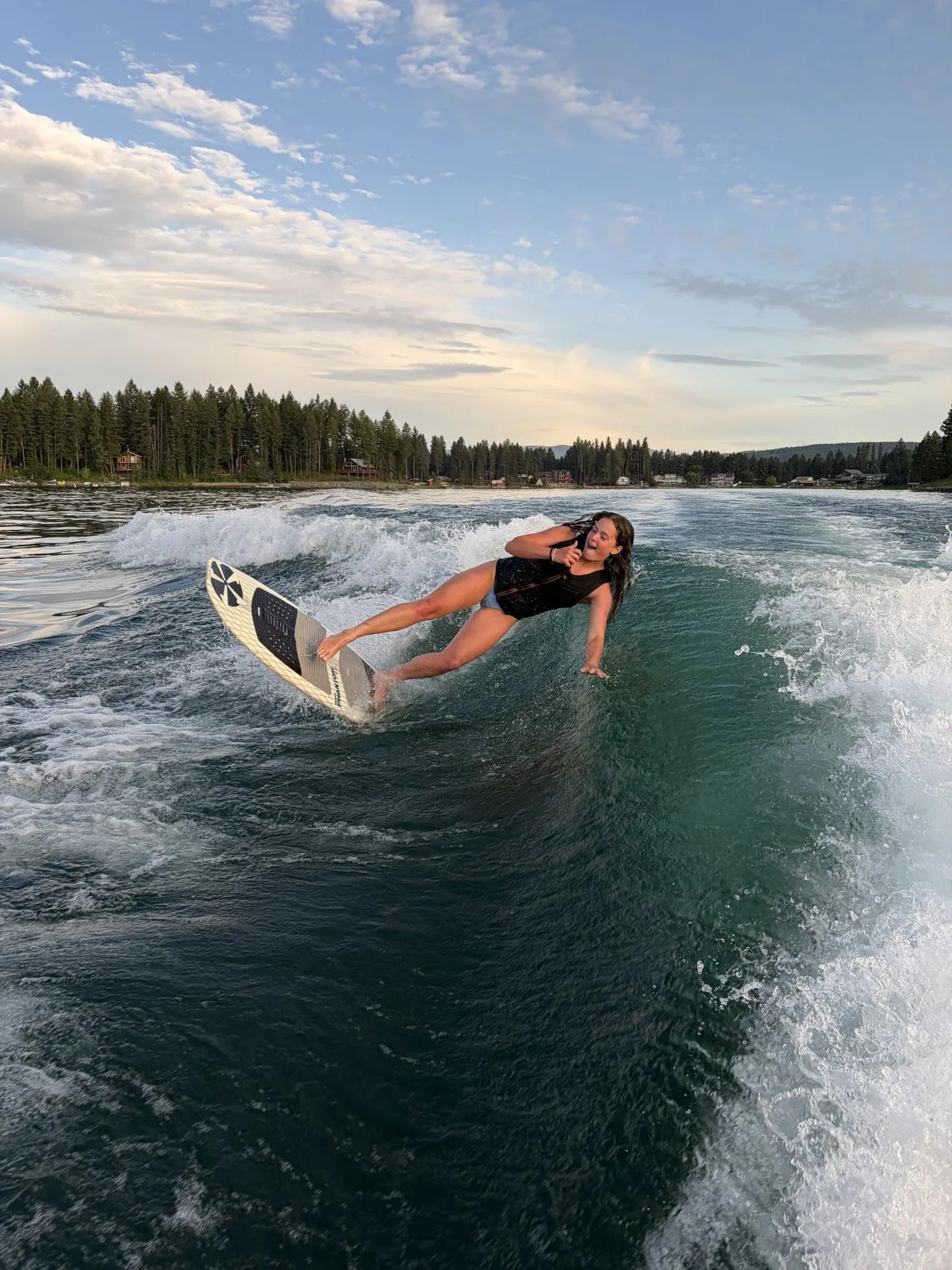
Clare, 17, set out to learn wake surfing behind a boat and document the technical, physical, and financial components of the sport. Clare practiced getting up on the water, finding the wave pocket, and dropping the tow rope to ride freely, recording video evidence and logging specific body position adjustments needed to stay balanced.
Alongside water sessions, Clare built an expense spreadsheet comparing the cost of new versus used boards, safety vests, tow lines, and hourly fuel burn rates. Clare also researched board design, calculating the surface area of surf-style versus skim-style boards and explaining how fin setup changes water resistance and board control.
To consolidate the learning, Clare wrote a step-by-step beginner guide detailing starts, rope release, stance control, common mistakes, and boat communication signals.
The tasks
Each task was submitted and reviewed on its own. XP is earned per task; the credit is the sum.
| Task | Subject | XP | Criteria met |
|---|---|---|---|
| Practice Wake Surfing Basics on Water | Physical Education | 100 | 3 of 3 |
| Build a Budget for Wake Surfing | Financial Literacy | 100 | 3 of 3 |
| Write a Beginner Wake Surf Guide | Language Arts | 100 | 3 of 3 |
| Compare Board Shapes and Fin Setups | Science | 100 | 3 of 3 |
More of the evidence
Shown as submitted, minus anything the family did not agree to share.
-
3 balance adjustments: 1. front foot closer to the edge and farther up the board so I didnt have to work as hard to stay closer to the boat 2. stand up straight and tall rather than a little hunched over 3. front shoulder in line with the boat because if its not like this its harder to stay in the sweet spot because you kinda go sideways.
-
Step-by-step: from deep-water start to free riding 1. Starting position Float on your back in deep water. Place both heels on the near edge of the board with your toes pointing upward. Keep your knees bent toward your chest so you are in a compact, seated position. The board should sit roughly perpendicular to the boat. Hold the handle with both hands, arms straight and relaxed, palms down. Rest the handle over or just outside your knees. Stay relaxed—your life vest will keep you floating. 2. The pull When the rope is tight and you are ready, call out “Hit it!” (avoid saying “Go,” which can sound like “No”). As the boat accelerates smoothly—usually around 10–12 mph for beginners—keep your arms straight. Do not pull yourself up with your arms. Press gently through your heels so water pressure can push the board under your feet. Stay compact and let the board roll from nearly vertical to flat beneath you. 3. Rising into stance Once the board is planing under your feet, stand up slowly. Keep your knees soft, chest upright, and eyes looking forward toward the boat rather than down at the board. Bring the handle toward your lead hip. This small movement helps turn the board parallel to the wake and sets your edge. Your weight should feel centered to slightly forward as you move through the whitewater. Finding the pocket 4.Steer gently toward the clean face of the wave by pressing your toes or heels. Stay low....
-
Surface Area A typical surf-style board around 5'0" has roughly 886 square inches of planform area. A skim-style board around 4'6" has about 748 square inches. That’s roughly 15–20% more surface area on the surf board, which means more float, more stability, and easier speed generation. The skim board’s smaller footprint reduces drag and makes it feel quicker and looser. Surf-Style vs Skim-Style Surf-style boards are longer, thicker, and higher volume. They have more rocker, fuller rails, and usually run a thruster (3-fin) or quad setup. The ride feels stable and drivey, closer to ocean surfing. They’re more forgiving and better for beginners, carving, and cruising the pocket. Skim-style boards are shorter, thinner, and lower volume with flatter rocker and harder rails. They typically run a small single fin (or sometimes twin/finless). The feel is loose, fast, and skate-like-built for spins and technical tricks. They have a steeper learning curve and less margin for error. Hybrids sit in the middle and try to offer a bit of both. How Fins Create Drag and Control Fins create lateral resistance in the water. More fin area and deeper placement give stronger hold and drive, but also more drag. Smaller fins reduce drag for a looser, faster feel, but sacrifice some control. Thruster (3 fins): Maximum stability and drive. Best for carving and learning. Twin (2 fins): Faster and looser by removing the center fin’s drag....
What the teacher checked
The criteria belong to the task. An Optio teacher marked each one from the evidence.
- Met
You logged at least 3 separate water practice sessions with dates and time spent
- Met
You recorded a video showing you standing up and riding the wave without holding the rope for 10 seconds
- Met
You wrote down 3 balance adjustments you made to stay in the sweet spot
- Met
You created a spreadsheet listing itemized prices for a board, vest, rope, and safety gear
- Met
You calculated the hourly fuel cost based on your boat's average fuel burn rate
- Met
You wrote a comparison showing the cost difference between buying new gear versus used gear
- Met
You wrote a step-by-step guide with at least 5 clear steps from deep-water start to free riding
- Met
You included standard hand signals for communicating with the boat driver
- Met
You listed common beginner mistakes and provided a simple fix for each one
- Met
You measured and calculated the surface area of at least 2 different wake surfboards
- Met
You made a comparison chart showing the differences between surf-style and skim-style boards
- Met
You wrote an explanation of how fin size and placement create drag and control
What it counted for
This project earned 400 XP toward a high school Physical Education credit, with additional credit applied across Science, Language Arts, Financial Literacy, and Digital Literacy. It serves as one project among several that Clare completes on the path to a full credit. A licensed teacher evaluated the video proof, written guides, and budget calculations directly against objective competency rubrics.
Optio students earn XP for finished work instead of letter grades. An Optio teacher reviews the evidence against the task's criteria and awards the XP. 2,000 XP is one high school credit on an Optio Academy transcript.
Wake surfing practice and analysis
Official transcript · Optio Academy
Questions about Optio
Can personal sports and outdoor activities count for high school credit?
Yes. Students at Optio can design learning projects around physical pursuits such as wake surfing, climbing, or dance. Credit is earned when the student pairs physical execution with documented skill mastery, safety knowledge, and analytical work.
How does a student project get turned into an assignment and evaluated?
Students build projects containing specific tasks with clear criteria for completion. Once the student uploads direct evidence like video footage, research notes, and spreadsheets, a licensed teacher reviews the work against the criteria to award credit.
What do XP and credits look like on an official transcript?
Optio converts earned XP directly into standard high school credits on an accredited transcript, where 2000 XP equals one full credit. Projects award XP across relevant academic subjects based on the demonstrated competencies rather than seat time.
Stories are written from real submissions on Optio. Student details are anonymized unless a family has recorded consent, and evidence is shown as submitted, minus anything a family did not agree to share. Published September 18, 2026, updated September 18, 2026.